





White patches
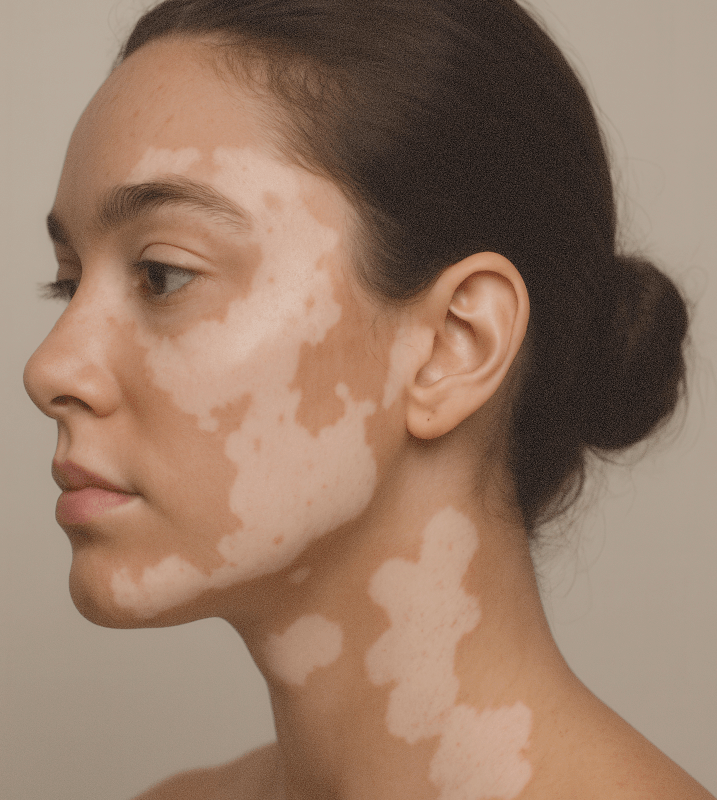
Patches usually have clear borders and may gradually expand.

PROGRAM
White patches can gradually affect confidence and everyday life. Vitiligo is not contagious. It occurs when pigment-producing cells stop working normally, so medical assessment can guide suitable care.

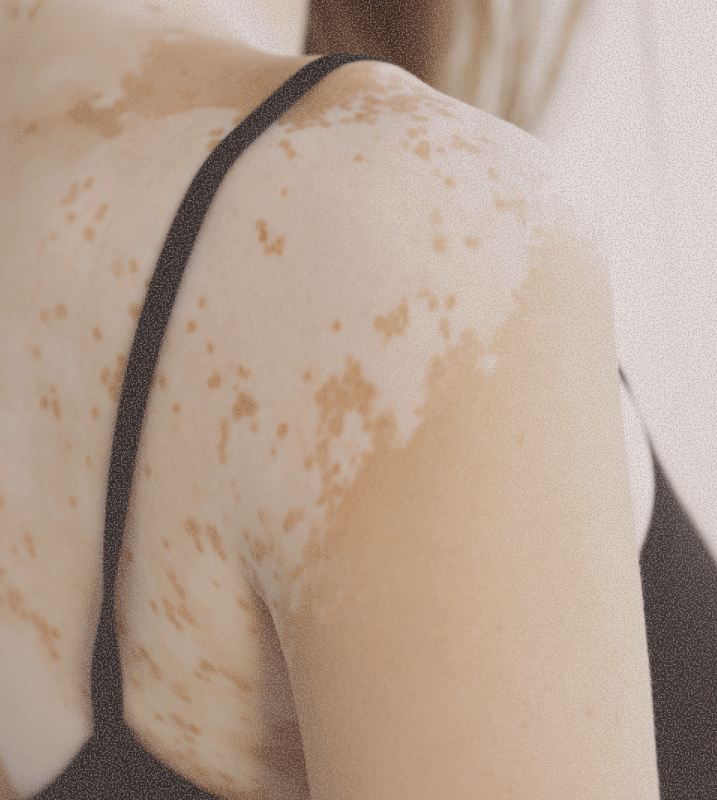
Vitiligo occurs when the immune system attacks melanocytes, the cells that produce skin pigment. White patches can appear in different sizes and locations. It is not contagious or life-threatening, but ongoing assessment can help manage pigmentation changes.
Patches usually have clear borders and may gradually expand.

The face, around the mouth and eyes, hands, feet, folds, and genital area.
There is usually no pain or itch, but affected skin may be more sensitive to sunlight.

PROGRAM
Steroids or calcineurin inhibitors may be prescribed according to the doctor’s assessment.
Controlled light can stimulate pigment cells and support repigmentation.
For stable cases, pigment cells may be transferred to selected depigmented areas.
Cosmetic camouflage products can help create a more even-looking skin tone.

A: No. Vitiligo is related to the immune system and does not spread through touch, shared items, or close contact.
A: It is associated with autoimmunity, genetics, family history, stress, skin injury, and other possible triggers.
A: Changes vary from person to person. Appropriate treatment and trigger management can help control the condition.
ELEVEN I CLINIC
Explore patient experiences or speak with our team to plan your treatment and book a doctor consultation.