




Dry, itchy skin
Itching may become worse at night or after contact with a trigger.

PROGRAM

Redness, itching, and dry or flaky skin may be signs of eczema rather than simple dryness. A medical assessment helps identify triggers and create a plan suited to your skin.

Eczema is an inflammatory skin condition associated with a weakened skin barrier. It can cause dryness, itch, redness, and flaking. Symptoms may come and go, and triggers vary from person to person.
PROGRAM
Itching may become worse at night or after contact with a trigger.
Affected areas may become dry, cracked, red, or scaly.
Repeated scratching can make the skin thicker and more irritated.
Stress, dry weather, sweat, or certain products may trigger flares.
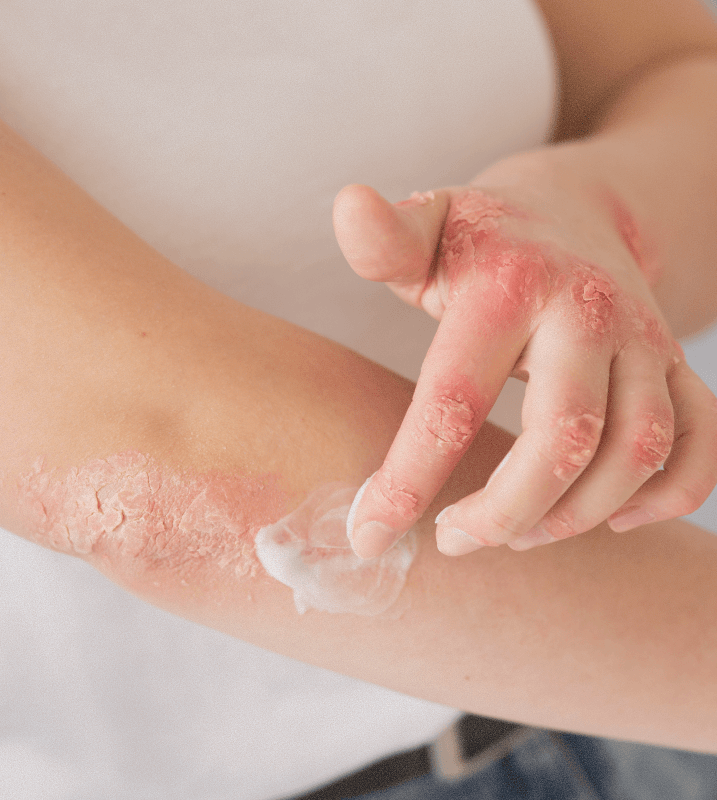
Bathe with lukewarm water, use gentle products, pat the skin dry, and moisturize immediately after bathing. See a dermatologist if the rash spreads, becomes painful, develops open skin, or disrupts sleep.
A: No. Eczema is related to the skin barrier and inflammation and does not spread through contact.
A: Try to avoid scratching because it can damage the skin and increase irritation or infection risk. Follow your doctor's advice for itch relief.
A: Symptoms can often be controlled with appropriate treatment and consistent care. Triggers and response vary between individuals.
ELEVEN I CLINIC
Explore patient experiences or speak with our team to plan your treatment and book a doctor consultation.